How I Turned Tax Planning Into a Lifeline After My Business Crashed
When my business collapsed, I felt like I was drowning in debt and tax bills I couldn’t afford. I didn’t know where to turn—until I discovered smart tax planning wasn’t just for accountants. It became my real-world survival tool. This is how I used practical strategies to cut liabilities, protect assets, and rebuild from rock bottom. No jargon, no hype—just what actually worked when everything else failed. What started as a desperate search for relief turned into a complete financial reset, grounded in clarity, discipline, and the quiet power of preparation. This is not a story of overnight success, but of steady recovery built on decisions that mattered most when I had the least.
The Day the Business Died
The call came on a Tuesday morning. My largest client was pulling out—no warning, no negotiation. Just a brief email stating they were shifting direction. That single message unraveled months of fragile stability. Within weeks, two more contracts dissolved. The revenue stream that had kept the lights on evaporated almost overnight. I had built the business over seven years, starting in a spare bedroom and growing it into a team of five. We served small manufacturers with customized logistics solutions. For a while, it worked. We broke even, then turned modest profits. But when demand slowed and clients delayed payments, I began using personal savings to cover payroll and rent. The business wasn’t just struggling—it was bleeding.
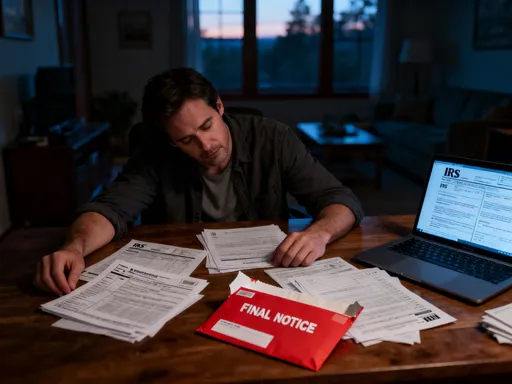
Then came the tax notice. The IRS had assessed my business entity for unpaid payroll taxes from the previous year. I had filed for an extension, assuming we’d catch up, but the liability had accrued penalties and interest. The total: over $47,000. I remember sitting at my kitchen table, staring at the letter, heart pounding. That number wasn’t just debt—it felt like a verdict. I had always paid my taxes on time as an individual, but as a business owner, the rules were different, and I hadn’t understood the full weight of my obligations. The business officially closed three months later. The office lease was terminated, equipment sold at a loss, and the domain name let expire. But the financial aftermath lingered far longer than the business itself.
What surprised me most wasn’t the failure—it was the emotional toll of financial exposure. I felt exposed, embarrassed, and deeply afraid. I wasn’t reckless; I had worked hard, kept records, and tried to do the right thing. Yet I had no real defense when the system demanded payment. I began to realize that I had treated tax compliance as a rearview mirror task—something to handle after the work was done—rather than a core component of financial survival. That mindset, I would later learn, was exactly what had left me vulnerable. The collapse wasn’t just a business failure; it was a failure of financial foresight. And that realization, painful as it was, became the starting point of my recovery.
Why Tax Planning Is Your First Emergency Tool (Not Your Last)
Most people think of tax planning as a year-end chore—something to do when profits are tallied and returns are due. But in times of financial stress, waiting until the end of the year can be catastrophic. I learned the hard way that tax planning is not a luxury for profitable businesses; it’s an emergency preparedness tool for those in decline. When revenue starts slipping, the instinct is to cut costs and chase invoices. But without a parallel strategy to manage tax exposure, those efforts can be undermined by preventable liabilities. The truth is, every financial decision you make during a downturn has tax implications—some of which can either ease the burden or deepen the crisis.
One of the earliest mistakes I made was misclassifying expenses. In an attempt to preserve cash, I delayed paying certain bills, including software subscriptions and contractor fees. Later, when I tried to deduct them, I discovered that the IRS requires expenses to be both ordinary and necessary, and they must be incurred and paid within the tax year to qualify. Because some of these costs were accrued but not paid, they couldn’t be deducted when I needed the write-off most. I also failed to properly track loss carryforwards. When a business operates at a loss, those losses can often be carried back to previous years for refunds or forward to offset future income. But without proper documentation and timely filing, that benefit disappears. I didn’t file Form 1045 in time to claim a carryback refund, losing nearly $8,000 in potential relief.
Another overlooked opportunity was government relief programs. During the downturn, I wasn’t aware that certain tax credits—like the Work Opportunity Tax Credit or energy-efficient equipment incentives—were still accessible even to failing businesses. These weren’t handouts; they were structured incentives designed to support specific actions, such as hiring from target groups or investing in qualifying assets. Because I wasn’t monitoring tax policy changes, I missed these chances to reduce my burden. The lesson was clear: tax planning during decline isn’t about minimizing payments at all costs—it’s about maximizing every available option within the law. It requires proactive engagement, not passive compliance. When I finally consulted a tax professional, he said something I’ll never forget: 'You don’t wait for the fire to start installing smoke detectors.' That shift in perspective—from reactive to preventive—changed everything.
Separating Business from Personal: A Firewall You Can’t Afford to Skip
One of the most damaging decisions I made in the early days of my business was blurring the line between personal and business finances. I used my personal checking account to pay business expenses, wrote business checks from my joint account, and even used a personal credit card for office supplies. At the time, it seemed efficient—why open another account when I was the only owner? But when the business failed, that lack of separation became a legal and financial liability. The IRS and creditors began scrutinizing transactions, questioning which expenses were truly business-related. Some deductions I claimed were disallowed because I couldn’t prove they were solely for business use. Worse, I risked what’s known as 'piercing the corporate veil'—a legal action where personal assets can be seized to satisfy business debts if the entity isn’t treated as a separate financial unit.
Rebuilding meant creating a clear firewall. I opened a dedicated business bank account, even though the business was no longer active, to segregate any remaining transactions. I transferred all business-related funds into that account and froze joint access. I also began documenting every past transaction with receipts, invoices, and calendar notes to establish a paper trail. This wasn’t just about taxes—it was about credibility. When dealing with the IRS or creditors, having clean records showed I wasn’t trying to hide anything. It also helped me identify which debts were business obligations and which were personal, allowing me to prioritize payments more effectively.
Another critical step was restructuring how I handled payments. Instead of mixing funds, I set up a system where any incoming money—such as asset sales or client settlements—went directly into the business account. From there, payments were made only to verified business creditors, with detailed records kept for each. I also stopped using personal assets to cover business shortfalls, a habit that had accelerated my financial exposure. By treating the business as a distinct entity, even in failure, I protected my personal savings, home equity, and retirement accounts from being targeted. This separation didn’t erase my debts, but it contained the damage. It taught me that financial discipline isn’t just about budgeting—it’s about structure. A strong boundary between personal and business finances isn’t a formality; it’s a defense mechanism that every entrepreneur must build from day one.
Harvesting Losses the Right Way
Losing a business is painful, but it can also create valuable tax opportunities—if handled correctly. One of the most powerful tools available to failing business owners is the ability to use net operating losses (NOLs) to reduce tax liability on other income. When a business spends more than it earns, that loss can often be used to offset income from wages, investments, or side work. In my case, the business had accumulated over $112,000 in losses over two years. Initially, I thought that was just a number on a spreadsheet. But with guidance, I learned how to convert that loss into real tax savings.
The key was understanding the difference between capital losses and ordinary losses. Capital losses come from selling assets like equipment or property for less than their purchase price. These are generally limited to $3,000 per year against ordinary income, with the remainder carried forward. Ordinary losses, on the other hand, arise from the day-to-day operations of a business and can fully offset other income in the year they occur. My business losses qualified as ordinary, which meant I could use them to reduce my taxable income from freelance work I had started. That translated into a tax refund of nearly $14,000—money I used to pay down high-interest debt and cover health insurance premiums.
Timing was also crucial. I had to decide when to write down assets. Selling equipment at a loss made sense, but doing it too late in the year could delay the deduction. I worked with a tax advisor to schedule disposals before December 31, ensuring the losses counted for that tax year. I also avoided common audit triggers, such as claiming excessive home office deductions or inflating inventory write-downs. The IRS pays close attention to business closures, so every claim had to be substantiated with records. I kept dated photos of damaged equipment, appraisal reports for unsold inventory, and third-party sale receipts. By following the rules precisely, I maximized my benefits without inviting scrutiny. Harvesting losses wasn’t about gaming the system—it was about using the system as it was designed: to provide relief during hardship. That $14,000 didn’t solve everything, but it gave me breathing room when I needed it most.
Restructuring Debts Without Triggering Tax Bombs
When creditors began calling, I explored debt settlement as a way to reduce what I owed. One lender agreed to forgive $28,000 of a business loan if I paid $10,000 in full satisfaction. It felt like a win—until I received a Form 1099-C from the bank the following January. The forgiven amount was reported as taxable income. That meant I now owed income tax on $28,000 I never actually received. Without knowing it, I had traded one debt for another—this time, a tax liability. For someone already struggling, this 'tax bomb' could have been devastating. But there was a way out.
The IRS allows an exclusion for canceled debt income if the taxpayer is insolvent at the time of forgiveness. Insolvency means your total liabilities exceed the fair market value of your assets. I qualified. I prepared a detailed net worth statement showing my debts far outweighed what I owned—my car, savings, and personal property. With that documentation, I filed IRS Form 982, Reduction of Tax Attributes Due to Discharge of Indebtedness, to exclude the canceled debt from my taxable income. This wasn’t a loophole; it was a legitimate provision designed to prevent people from being taxed on money they never had. By completing this process correctly, I avoided a tax bill of over $7,000.
I also explored bankruptcy as a structured way to resolve debts. While it’s not the right choice for everyone, Chapter 7 bankruptcy allowed me to discharge certain obligations without tax consequences. The IRS does not treat debt discharged in bankruptcy as taxable income, which provided additional protection. I worked with a bankruptcy attorney to ensure I understood which debts were dischargeable and how the process would affect my credit and future borrowing. Importantly, I coordinated with my tax advisor to align the bankruptcy filing with my tax planning, ensuring I didn’t inadvertently trigger other liabilities. Restructuring debt isn’t just about negotiation—it’s about understanding the full financial picture. A forgiven loan might seem like relief, but without proper planning, it can create a new burden. By acting with knowledge and documentation, I turned a potential disaster into a manageable transition.
Protecting Assets While Staying Fully Legal
When your business fails, the instinct is to protect what’s left. But asset protection must be done within legal boundaries. I learned that hiding assets or transferring them to family members to avoid creditors can lead to penalties, lawsuits, or even criminal charges. Instead, I focused on legitimate, transparent methods to safeguard essential resources. One of the most effective tools was my retirement account. Under federal law, 401(k)s and IRAs are generally protected from creditors in most bankruptcy cases. I had contributed modestly over the years, but that $68,000 became a critical safety net. I did not withdraw funds early—avoiding taxes and penalties—and instead let it grow undisturbed.
Another protection came from my state’s homestead exemption. I owned a modest home with about $90,000 in equity. My state allows homeowners to shield a certain amount of home equity from creditors, and I filed the necessary declaration to claim that protection. This didn’t mean I could ignore mortgage payments, but it did prevent forced sale to satisfy unsecured business debts. I also reviewed my insurance coverage, increasing liability protection on my personal umbrella policy. While it didn’t cover business debts, it provided a buffer against personal lawsuits that could arise from business activities.
I avoided risky strategies like forming offshore entities or transferring titles without fair compensation. Those tactics often attract IRS scrutiny and can be undone in court. Instead, I focused on what was permitted: maximizing exemptions, maintaining compliance, and preserving essential assets through lawful means. This approach didn’t make me rich, but it gave me stability. I retained a place to live, a vehicle to work, and a foundation for rebuilding. Asset protection isn’t about escaping responsibility—it’s about preserving dignity and opportunity when everything else has been lost. By staying within the rules, I maintained my integrity and set the stage for a clean financial restart.
Rebuilding with Smarter Systems from Day One
Recovery didn’t happen overnight. It came from consistent, informed choices. When I started a new venture—a consulting practice focused on small business operations—I did things differently. I chose an S-corporation structure to gain flexibility in income distribution and tax treatment. I set up separate bank accounts, used accounting software to track every transaction in real time, and scheduled quarterly tax reviews with my advisor. These weren’t optional tasks—they were non-negotiable systems that kept me accountable.
I also built tax planning into my business model. Instead of waiting for tax season, I estimated liabilities monthly and set aside funds in a dedicated savings account. I took advantage of retirement contributions, health savings accounts, and quarterly estimated payments to avoid surprises. I documented everything—contracts, expenses, mileage—and kept digital and physical backups. I learned to view tax strategy not as a cost, but as an investment in resilience. Each decision was made with both short-term survival and long-term stability in mind.
Today, I still carry the lessons of that failure. Tax planning is no longer an afterthought—it’s my first line of defense. It’s not about getting rich quick or avoiding every dollar owed. It’s about clarity, control, and the peace that comes from knowing you’ve done everything possible to protect yourself and your family. For anyone facing financial collapse, I offer this: the end of a business is not the end of your financial life. With the right tools, discipline, and mindset, you can turn tax planning from a source of fear into a lifeline of recovery. It won’t bring back what you lost, but it can help you build something stronger, smarter, and more sustainable than before.