Hiking Through History: Public Spaces That Breathe Life Into Cusco
You know what surprised me most about Cusco? It wasn’t just the altitude—it was how every trail led to a plaza, a market, or a centuries-old gathering spot where locals still connect. Hiking here isn’t just about mountain views; it’s about walking through living public spaces shaped by Inca roads and Andean traditions. This is more than a trek—it’s a journey into the heart of community life, high in the Peruvian Andes. Unlike typical tourist hikes that end at a scenic overlook, the paths around Cusco dissolve the boundary between nature and society. Each footstep echoes with history, while every destination pulses with present-day life. Here, movement through the landscape is inseparable from participation in culture, making hiking not only a physical journey but a social and spiritual one as well.
Arrival in Cusco: The First Step into a Living City
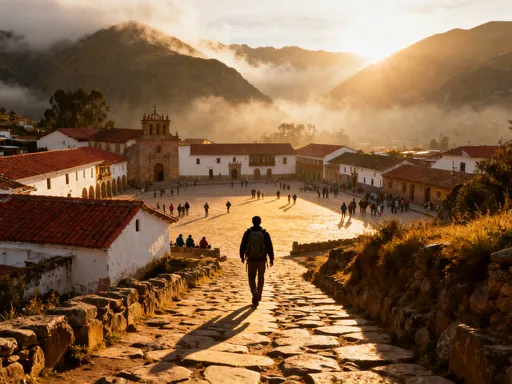
Stepping off the bus or plane into Cusco, visitors are immediately met with a city that breathes through its open spaces. The narrow cobblestone streets wind like veins toward wide plazas, where families gather, musicians play, and elders sip coca tea on weathered benches. Colonial-era buildings with carved stone facades frame the skyline, their balconies draped in red geraniums. Yet behind the postcard beauty lies a deeper rhythm—the constant flow of people through shared urban spaces. The air is thin at 3,400 meters, and this altitude shapes everything: the pace of walking, the depth of breath, the patience required to simply exist here. Newcomers quickly learn that rushing is not only physically taxing but culturally out of step.
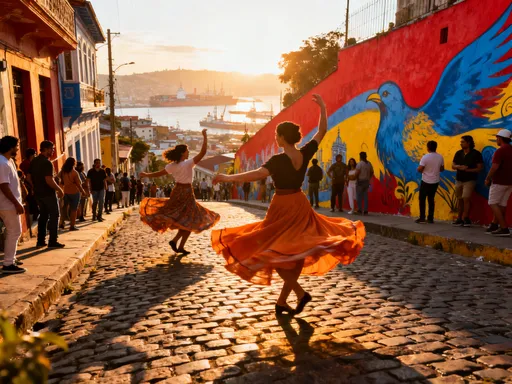
At the center of it all stands the Plaza de Armas, the historic and emotional heart of Cusco. Once the ceremonial core of the Inca Empire, it was later transformed by Spanish colonizers into a Catholic stronghold. Today, it belongs to the people. Locals stroll its perimeter during the evening promenade, children chase pigeons between fountains, and artisans display handwoven textiles on folding tables. The cathedral looms large, but it is the open space itself—its benches, trees, and cobblestones—that holds the true power. This plaza is not a museum exhibit; it is a living room for the city, where generations meet, traditions are passed down, and identity is reaffirmed daily.
For the arriving hiker, this public vibrancy marks the beginning of a shift—from observer to participant. As one adjusts to the altitude, so too does one adapt to the tempo of communal life. A simple walk across the plaza becomes an invitation: to sit, to watch, to smile. Vendors offer chicha morada, a sweet purple corn drink, not just as a refreshment but as a gesture of welcome. Over time, the distinction between tourist and local begins to soften, especially when both are united by the same need to move slowly, breathe deeply, and appreciate the shared space beneath the Andean sky.
The Inca Road System: Ancient Pathways as Public Infrastructure
Beneath the modern trails of Cusco lies a vast network of ancient pathways known as Qhapaq Ñan, the Great Inca Road. This sophisticated infrastructure once stretched over 30,000 kilometers across the Andes, connecting mountain communities, administrative centers, and sacred sites. Far more than mere transportation routes, these roads were the arteries of communication, trade, and social cohesion in the Inca Empire. Today, many of these original stone paths remain intact, hidden in plain sight beneath moss and centuries of use. Hiking in the Cusco region often means walking on the same stones laid by Inca engineers more than 500 years ago—a direct physical link to a civilization that understood the power of public space.
What makes the Qhapaq Ñan remarkable is its integration of geography, engineering, and community. The roads were designed not to avoid human settlements but to connect them. Trails led directly into plazas, temples, and agricultural terraces where people lived, worshipped, and worked. Unlike modern highways that bypass towns, the Inca roads invited interaction. Travelers—whether messengers, soldiers, or pilgrims—were expected to stop, rest, and engage. Tambo waystations provided shelter and food, reinforcing the idea that movement through space was a shared experience, not a solitary pursuit.
Modern hikers following sections of the Inca Trail toward Machu Picchu or lesser-known ruins like Moray or Pisac are unknowingly participating in this ancient tradition of connectivity. The final descent into a village, where women grind corn in communal courtyards or children wave from stone doorways, mirrors the experience of Inca travelers centuries ago. These moments are not incidental; they are the intended outcome of a system built around human interaction. When a hiker arrives at a highland community after hours on the trail, the warm smile from a local elder or the offer of a shared meal is not just hospitality—it is the continuation of a centuries-old social contract.
Recognizing this transforms the act of hiking from recreation into reverence. Each step becomes a dialogue with history, a recognition that public space has always been sacred in this region. The Inca did not separate infrastructure from culture; they embedded one within the other. Today’s travelers, by walking these paths respectfully and mindfully, become part of that legacy—a living thread in a long-standing tapestry of connection.
From Trail to Town: How Hiking Connects Isolated Communities
One of the most transformative experiences in Cusco is a day hike from the city to a nearby village, such as Tipón or Huallayco. These journeys begin on quiet trails that climb above the urban sprawl, offering panoramic views of terraced hillsides and distant snow-capped peaks. But the true reward comes not from the scenery alone—it arrives when the path descends into a small Andean community where life unfolds in open-air plazas and family-run market stalls. Here, hikers are no longer outsiders looking in; they are guests welcomed into the rhythm of daily life.
In these village centers, public space functions as both stage and sanctuary. Women in traditional pollera skirts sit on low stools weaving colorful belts using backstrap looms. Farmers unload bundles of quinoa and potatoes from donkeys, arranging them neatly on wooden boards. Children play soccer on packed dirt fields while elders gather under eucalyptus trees to discuss the weather and crops. The plaza is not just a physical space; it is the foundation of social resilience. In areas where roads are limited and vehicles scarce, these gathering places ensure that information, goods, and support circulate freely.
For visiting hikers, these moments offer rare authenticity. A simple exchange—buying a warm empanada from a vendor, sharing a bench with a grandmother watching her grandchildren—becomes a bridge between worlds. There is no scripted performance for tourists; this is real life, unfolding naturally. And because many of these communities rely on agriculture and handicrafts, the presence of respectful visitors provides vital economic support. When a traveler purchases a hand-knitted alpaca scarf or a clay pot made in the village, they are not just acquiring souvenirs—they are sustaining traditions that might otherwise fade.
What stands out most is the inclusivity of these spaces. Despite language barriers and cultural differences, there is an unspoken understanding that public plazas belong to everyone. Locals do not see visitors as intruders but as participants in a shared human experience. This openness is not taken for granted—it is cultivated through generations of mutual respect. Hikers who approach these communities with humility, who listen more than they speak, often leave with a profound sense of belonging, as if they have been briefly adopted into a larger family.
Sacred Geography: When Public Space Meets Spiritual Practice
Among the most powerful public spaces in the Cusco region are those that serve both communal and spiritual purposes. Sites like Sacsayhuamán, Q’enqo, and Tambomachay are often labeled as archaeological ruins, but for many Andean people, they are living ceremonial grounds. These places were designed with precise astronomical alignments and carved directly into the earth, reflecting an Indigenous worldview in which land, community, and spirit are inseparable. Hiking to these locations is not merely a historical tour—it is a pilgrimage through sacred geography.
Sacsayhuamán, perched on a hilltop overlooking Cusco, is renowned for its massive stone walls, some blocks weighing over 100 tons. But beyond the engineering marvel, the site functions as a gathering place for Inti Raymi, the Festival of the Sun, held every June. During this event, thousands of locals and visitors fill the terraces to witness reenactments of Inca rituals, music, and dance. The open spaces between the stones become stages for collective memory, where history is not read but performed. Even on ordinary days, it is common to see small groups lighting incense, offering coca leaves, or silently meditating—acts of quiet devotion that honor the site’s enduring spiritual significance.
Q’enqo, meaning “labyrinth” in Quechua, features intricate rock carvings and underground chambers believed to have been used for astronomical observation and ceremonial offerings. The site’s central plaza-like clearing is often occupied by local families during weekends, who come to picnic, play music, and teach children about their heritage. Here, spirituality is not confined to temples or churches; it is woven into everyday life. The act of gathering in this space—whether for celebration, education, or reflection—is itself a form of worship.
For hikers, encountering these spaces raises important questions about respect and responsibility. While tourism brings attention and resources, it also risks turning sacred sites into photo opportunities. The key is mindful engagement: staying on marked paths, refraining from touching ceremonial offerings, and observing quietly rather than disrupting. When done with intention, hiking to these places becomes an act of reverence—a way to honor the living traditions that continue to shape Cusco’s identity.
Markets as Dynamic Public Hubs Along Hiking Routes
No exploration of Cusco’s public spaces would be complete without visiting its markets—vibrant, sensory-rich environments that serve as the economic and social engines of both urban and rural life. The San Pedro Market, located just blocks from the Plaza de Armas, is a prime example. Open-air stalls overflow with fresh produce: purple potatoes, golden lucuma fruit, bunches of fragrant herbs, and rows of dried alpaca meat. The air hums with conversation, the clatter of knives on cutting boards, and the occasional burst of laughter from a shared joke between vendors.
But San Pedro is more than a place to shop—it is a communal living room. Locals gather here not just to buy food but to catch up with neighbors, share meals at communal tables, and even attend small cultural events. Benches are rarely empty; they are occupied by grandmothers knitting, students reviewing notebooks, or travelers sketching in journals. The market operates on a rhythm of reciprocity: you give respect, you receive warmth. A simple “buenos días” in Quechua or Spanish can open doors to deeper conversations, recipe tips, or invitations to nearby festivals.
Even more revealing are the rural markets accessible only by foot, such as the weekly fair in Pisac. Hiking down from the ruins to the valley below, travelers arrive at a bustling scene where farmers from surrounding villages bring their harvests to sell. The layout is organic—no formal stalls, just blankets spread on the ground displaying quinoa, medicinal plants, and hand-carved wooden tools. Weavers display intricate textiles dyed with natural pigments, each pattern telling a story of ancestry and place. These markets are not tourist attractions; they are essential lifelines for remote communities, where cash from sales ensures access to medicine, education, and supplies.
For the hiker, participating in these markets is an act of connection. Buying a bundle of oca or a hand-stitched bag supports local livelihoods directly. More importantly, it fosters mutual recognition—a silent acknowledgment that we are all part of the same human web. These spaces remind us that public life thrives not in grand monuments but in the everyday exchange of goods, glances, and goodwill. They are proof that commerce and community need not be opposites; when rooted in tradition and respect, they can be one and the same.
Urban Trails and Green Corridors: Cusco’s Evolving Public Spaces
As tourism continues to grow, Cusco faces the challenge of preserving its public spaces while accommodating change. In response, a quiet revolution is underway—one led by local residents, urban planners, and environmental advocates committed to protecting the city’s communal soul. One of the most promising developments is the creation of urban trails and green corridors that reconnect neighborhoods, restore ecological balance, and promote accessible recreation. These paths, often built along restored colonial-era canals or former railway lines, offer safe, scenic routes for walking, jogging, and cycling within the city.
One such project follows the course of the Huatanay River, once heavily polluted and neglected, now being transformed into a linear park with native plants, walking paths, and public art installations. Community groups organize clean-up days, schoolchildren plant trees, and elders take morning walks along its revitalized banks. These efforts are not just about beautification—they are about reclaiming space for people. In a city where real estate pressures threaten to privatize every corner, green corridors serve as democratic zones where everyone, regardless of income, can breathe, move, and belong.
Hiking along these urban trails offers a different kind of insight. Instead of panoramic mountain vistas, the views are intimate: laundry flapping on balconies, children playing in courtyards, street vendors preparing anticuchos on small grills. The experience is slower, quieter, but no less profound. It reveals how public space functions at the neighborhood level—where gossip travels faster than Wi-Fi, where a shared bench can become a council of elders, and where a simple footpath can strengthen community bonds.
Sustainable design plays a crucial role in ensuring these spaces remain inclusive. Benches are placed at regular intervals for those with limited mobility, signage includes both Spanish and Quechua, and lighting ensures safety after dark. These details reflect a deeper philosophy: that public space should serve all, not just the young, the fit, or the foreign. As Cusco navigates the pressures of modernization, these green corridors stand as testaments to what is possible when communities prioritize connection over commerce, and care over convenience.
Conclusion: Hiking as a Way of Belonging
Hiking in Cusco is not just about reaching a destination; it is about becoming part of a living story. Each trail leads not only to a view but to a plaza, a market, a ceremony, or a conversation—moments that remind us of our shared humanity. The city’s public spaces, shaped by Inca engineering, Andean traditions, and centuries of communal life, offer something increasingly rare in the modern world: authenticity, connection, and continuity. They are not frozen in time but constantly renewed by the people who use them.
What makes Cusco unique is that history is not confined to museums or guidebooks—it walks beside you on every path. The stones beneath your feet, the songs in the plaza, the hands that weave and plant and heal—they all speak of a culture that values community as much as survival. For the mindful traveler, hiking here becomes an act of reciprocity: you give attention, you receive belonging.
As tourism continues to shape the region, the challenge is to honor these spaces without consuming them. This means moving slowly, listening deeply, and participating with humility. It means choosing trails that support local communities, buying from family-run stalls, and learning a few words in Quechua not as a gimmick but as a gesture of respect. It means recognizing that the best hikes do not end at a viewpoint—but at a moment of human connection.
In a world where public life often feels fragmented, Cusco stands as a quiet reminder of what is possible when space is shared, when history is lived, and when movement becomes meaning. The trails here do not just lead through the Andes—they lead into the heart of what it means to belong.