Lost in the Wild Beauty of Germany’s Rhine Valley
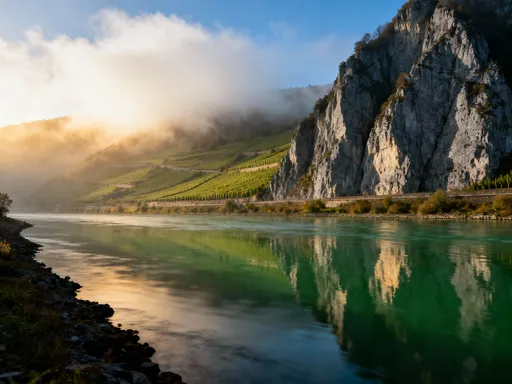
You know that feeling when nature just slaps you in the face with beauty? That’s the Rhine Valley. I’m talking emerald rivers, misty hills, and vineyard-covered slopes that roll forever. No overhyped tourist traps—just raw, untouched landscapes that make you forget your phone even exists. This isn’t just a trip; it’s a full sensory dive into one of Europe’s most soul-stirring natural escapes. As the morning mist lifts above the river, revealing ancient castles perched on craggy cliffs and forests spilling down steep banks, you realize this is not a postcard fantasy. It’s real, and it’s waiting. For travelers seeking serenity, authenticity, and a deep connection with nature, the Rhine Valley offers a rare kind of magic—one that unfolds slowly, quietly, and with unforgettable grace.
The First Glimpse: Arriving in the Rhine Valley
Approaching the Rhine Valley for the first time is like stepping into a living painting. Whether arriving by train from Cologne, driving along the B9 federal highway, or boarding a riverboat in Koblenz, the transition from urban Germany to this wild, undulating landscape is both gradual and profound. The first hints appear subtly—a bend in the river glimpsed between trees, a distant tower rising above the treeline, the soft curve of vineyards tracing a hillside like stitches in green fabric. Then, suddenly, the valley opens up, and the full scale of its beauty becomes undeniable.
Travelers on the Deutsche Bahn’s scenic rail lines often describe the moment the Rhine comes into view as breathtaking. The train glides along the riverbank, offering unobstructed views of water reflecting the sky in shifting shades of silver and blue. On either side, forested slopes rise steeply, their colors changing with the seasons—lush green in summer, golden in autumn, soft gray-green in winter. The rhythm of the journey mirrors the river’s flow: steady, calming, immersive. There are no jarring interruptions, only the quiet hum of movement through a landscape that feels both ancient and alive.
For those arriving by car, the experience is equally powerful but more self-directed. Pulling over at one of the many designated viewing points—such as the Lorelei Rock lookout—offers a chance to pause and absorb the panorama. The Rhine curves dramatically below, flanked by terraced vineyards and crowned with ruins of medieval fortresses. These castles, though weathered by time, still command the skyline, silent witnesses to centuries of trade, conflict, and quiet habitation. Their presence adds a layer of historical depth to the natural splendor, reminding visitors that this valley has long been a corridor of human passage and aspiration.
Yet what strikes most deeply is not the grandeur alone, but the harmony between wild nature and subtle human influence. Unlike more commercialized regions, the Rhine Valley retains a sense of untouched authenticity. There are no sprawling resorts or neon signs. Instead, small villages with slate-roofed houses nestle in the folds of the hills, their church spires rising like gentle exclamation points in the landscape. This balance—between wildness and habitation, history and present-day life—sets the tone for the entire journey. It invites not just observation, but participation in a slower, more mindful way of traveling.
Following the River: The Rhine as a Living Pulse
The Rhine River is more than a scenic backdrop—it is the beating heart of the valley. Flowing south to north from the Swiss Alps to the North Sea, this mighty waterway has shaped the region’s ecology, economy, and culture for millennia. In the Middle Rhine section, where the river cuts deeply through slate mountains, its presence is especially powerful. Here, the water moves with quiet strength, carving its path through rock and time, sustaining a delicate web of life along its banks.
One of the most peaceful ways to experience the Rhine is from the water itself. Scheduled passenger boats operated by RDG (Rhein-Neckar-Verkehr) and other regional services offer low-impact, eco-friendly journeys between towns like Rüdesheim, St. Goar, and Bingen. These vessels glide smoothly along the surface, producing minimal wake and noise, allowing passengers to observe the shoreline in near silence. From this vantage point, the river reveals details invisible from land: the flicker of kingfishers darting into reeds, the slow drift of water plants carried by the current, the occasional otter slipping into the water at dusk.
The Rhine’s clarity varies with the season and rainfall, but even in high water, its color remains striking—shifting from deep emerald in summer to a frosted gray-green after winter rains. Along the banks, riparian zones thrive with alder trees, willows, and reed beds that provide shelter for birds, amphibians, and insects. These buffer zones are vital for flood control and water filtration, playing a crucial role in maintaining the river’s health. Conservation efforts by organizations like Naturschutzbund Deutschland (NABU) have helped restore native vegetation and protect nesting sites for endangered species such as the black stork and the white-tailed eagle.
For many visitors, the river’s most profound quality is its sense of continuity. Watching the water flow endlessly toward the horizon evokes a feeling of timelessness. It has carried Roman traders, medieval merchants, and modern-day tourists, yet it remains unchanged in its essence. This quiet constancy offers a rare emotional anchor in a fast-moving world. To follow the Rhine is not merely to travel through space, but to move through layers of history and natural rhythm, reconnecting with something deeper and more enduring than daily life often allows.
Vineyards on the Edge: Where Humans Meet the Wild
Clutching the steep slopes above the Rhine are terraced vineyards that seem almost impossibly planted. These narrow strips of cultivated land, carved into inclines that rise at angles up to 70 degrees, are a testament to generations of careful stewardship. Known for producing some of Germany’s finest Rieslings, these vineyards are not just agricultural sites—they are living landscapes where human labor and natural forces coexist in delicate balance.
The geology of the region plays a key role in this harmony. The soil, rich in weathered slate, retains heat and imparts a distinctive mineral quality to the grapes. This terroir, combined with the valley’s microclimate—sheltered by surrounding hills and warmed by the river’s reflective surface—creates ideal conditions for slow, flavorful ripening. But growing wine here is no easy task. Every spring, farmers climb the slopes by foot or with small mechanized aids to prune, till, and harvest, often working by hand where machines cannot go. Their work is both physical and poetic, a quiet dialogue between earth and effort.
Many of these vineyards are managed using sustainable or organic practices. Wineries like Weingut Joh. Jos. Prüm in Bernkastel-Kues and Weingut Robert Weil in Kiedrich have long embraced low-intervention methods, avoiding synthetic pesticides and preserving natural ground cover between rows. This approach not only protects soil health but also supports biodiversity—bees, butterflies, and birds thrive in these managed yet ecologically rich spaces. Some estates even integrate solar panels and rainwater collection systems, demonstrating a commitment to long-term environmental responsibility.
Walking through these vineyards offers a uniquely immersive experience. The rows stretch upward in precise lines, catching the sunlight at different angles throughout the day. In late summer, the air carries the sweet scent of ripening grapes; in autumn, the vines turn golden, and the hills glow with warm hues. From a high vantage point, the patchwork of vineyards, forests, and river creates a panoramic view that feels both grand and intimate. It is a landscape shaped by human hands, yet never tamed—always answering to the rhythms of weather, season, and soil.
Hiking Into the Silence: Trails That Transform
For those seeking deeper connection, the Rheinsteig Trail offers one of Europe’s most rewarding long-distance hiking experiences. Stretching approximately 320 kilometers from Bonn to Wiesbaden, this well-marked path follows the eastern bank of the Rhine, winding through forests, past castles, and along dramatic cliffs. Designed with both accessibility and preservation in mind, the trail balances challenge with safety, offering something for experienced hikers and casual walkers alike.
What sets the Rheinsteig apart is its ability to guide travelers off the beaten path and into moments of quiet revelation. One moment, you’re navigating a moss-covered stone staircase shaded by beech trees; the next, you emerge into a sunlit clearing with a sweeping view of the river below. The trail’s design encourages slowness—narrow footpaths discourage rushing, while strategically placed benches invite rest and reflection. Along the way, interpretive signs provide insights into local flora, geology, and history, enriching the journey without disrupting its meditative pace.
Specific sections stand out for their beauty and emotional impact. The stretch between St. Goar and Oberwesel, for example, passes the ruins of Burg Katz and Burg Rheinfels, where the scent of wild thyme mixes with the crisp forest air. Hikers often report a sense of time slowing down, as if the valley itself encourages presence. Birdsong replaces city noise; the rustle of leaves becomes the dominant sound. This sensory shift is not accidental—it is the result of careful trail planning and ongoing conservation efforts to minimize light and noise pollution.
Practical preparation enhances the experience. Sturdy footwear is essential, especially after rain when paths can become slippery. Lightweight, moisture-wicking clothing and a reliable daypack with water, snacks, and a basic first-aid kit are recommended. While the trail is well-signed with the red “R” logo, carrying a map or using an offline GPS app ensures confidence in more remote stretches. Most importantly, hikers are encouraged to move with respect—yielding to others, staying on marked routes, and leaving no trace of their passage. In doing so, they become part of the valley’s quiet rhythm rather than a disruption to it.
Hidden Valleys and Secret Spots Off the Main Path
Beyond the well-trodden trails and famous viewpoints lie quieter corners of the Rhine Valley—places where solitude feels natural and the landscape speaks in whispers. These hidden spots are not marked on every map, but they are accessible to those willing to wander a little further. A narrow footpath leading down to a secluded river cove, a forgotten forest clearing carpeted with wildflowers in spring, or a quiet meadow where deer graze at dawn—these are the moments that stay with travelers long after they return home.
One such place is the Kühkopf Nature Reserve, a floodplain forest near Nierstein that remains largely undisturbed. Accessible via a network of soft-surface trails, it offers a different face of the Rhine—wetlands alive with frogs, dragonflies, and warblers. Boardwalks wind through reed beds, allowing close observation without disturbing the habitat. In early morning, mist rises from the water, creating an ethereal atmosphere that feels removed from the modern world.
Another lesser-known gem is the Ellertal Valley, tucked behind the main ridge near Rüdesheim. This forested side valley is traversed by a quiet hiking loop that passes old stone quarries and the remains of a 19th-century charcoal burner’s hut. In late spring, the forest floor bursts with bluebells and wood anemones, and the air is thick with the scent of pine and damp earth. Because it lies just off the main tourist corridor, it rarely sees large crowds, making it ideal for contemplative walks or quiet picnics.
Exploring these spaces requires a mindset of respect. Visitors are asked to stay on designated paths to protect fragile vegetation, avoid disturbing wildlife, and carry out all waste. Dogs should be kept on leashes, and loud noises minimized. These guidelines are not restrictions, but invitations to engage more deeply—by listening, observing, and moving gently. When approached with care, these hidden places offer not just beauty, but a sense of belonging, a reminder that nature welcomes those who come in peace.
Seasons of Change: Experiencing the Valley Year-Round
The Rhine Valley is never the same twice. Each season paints the landscape in new colors, shifts the mood of the air, and brings different rhythms to both nature and human life. Winter wraps the valley in silence—mist clings to the river, frost glimmers on vineyard posts, and bare tree branches etch delicate patterns against the sky. Though colder, this time of year offers unmatched atmospheric beauty, especially at sunrise when the first light breaks through the fog, gilding the castle ruins in soft gold.
Spring arrives tentatively at first, then bursts forth in waves of color. Cherry and apple trees bloom along the slopes, their pink and white blossoms contrasting with the deep green of emerging leaves. Wild garlic carpets the forest floors, releasing its pungent aroma into the air. This is a season of renewal, when birds return, insects awaken, and the valley feels newly alive. For photographers and nature lovers, spring offers some of the most intimate and fleeting moments.
Summer brings warmth and vibrancy. The vineyards flourish under long sunlight, and river traffic increases with pleasure boats and kayakers. Evenings are long, and villages host outdoor wine festivals where locals gather to celebrate the harvest-to-come. While this is the busiest season, early mornings and weekdays still offer pockets of tranquility, especially on the higher trails where breezes keep the air fresh.
Autumn is often considered the most magical. The vine leaves turn fiery red, amber, and gold, and the air carries a crisp clarity. Fog returns, but now it swirls in romantic tendrils around hilltop castles, creating scenes straight from a painting. This is also the time of the wine harvest, when families work together in the fields, and the scent of crushed grapes fills the air. For many, autumn offers the perfect balance of mild weather, visual drama, and cultural richness—a final, glorious farewell before winter’s quiet returns.
Staying Light: Low-Impact Travel in a Fragile Landscape
Preserving the Rhine Valley’s beauty requires conscious choices from every visitor. This is not a place to rush through or consume thoughtlessly. Instead, it calls for slow, intentional travel—one that honors the fragility of its ecosystems and the legacy of its communities. Fortunately, the region is well-equipped for eco-conscious exploration.
Public transportation is efficient and scenic. Regional trains and buses connect major towns and trailheads, reducing the need for private cars. The Deutschland-Ticket, a monthly pass valid on local transit nationwide, makes this option both affordable and convenient. For shorter distances, bike rentals are widely available in towns like Bacharach and Oberwesel. Cycling along the Rhine’s flat riverside paths combines exercise with breathtaking views, all while producing zero emissions.
Accommodations increasingly reflect sustainable values. Many guesthouses and family-run hotels have earned eco-certifications such as the EU Ecolabel or NaturePlus. These properties prioritize energy efficiency, water conservation, and locally sourced breakfasts—often featuring regional cheeses, breads, and fresh fruit. Some even generate their own power through solar panels or use rainwater for irrigation. Staying in these places not only reduces environmental impact but also deepens the travel experience, fostering connection with local hosts and traditions.
Equally important is the traveler’s attitude. Moving slowly, listening to the land, and minimizing waste are simple acts with lasting effects. Choosing reusable water bottles, refusing single-use plastics, and supporting businesses that value sustainability all contribute to the valley’s long-term health. Most of all, approaching the Rhine Valley with gratitude—recognizing it not as a backdrop for photos, but as a living, breathing world—transforms the journey from sightseeing into something more meaningful.
The wild beauty of the Rhine Valley is not a resource to be used up, but a gift to be cherished. It reminds us that nature, when respected, can heal, inspire, and endure. For the women who travel here—many balancing family, work, and personal dreams—this landscape offers a rare kind of freedom: the freedom to breathe deeply, to walk without agenda, to feel small in the best possible way. In the end, the valley does not ask for anything grand. It only asks that we come gently, stay present, and leave behind nothing but footprints—and take away, perhaps, a renewed sense of peace.