You Won’t Believe What Olympia’s Ancient Cityscape Feels Like
Walking through Olympia, Greece, I didn’t just see ruins—I felt time slow down. Stone temples rose under golden light, pines whispered in the breeze, and the quiet power of history pulsed beneath my feet. This isn’t just a site; it’s a living cityscape where ancient energy meets natural beauty. If you think it’s just about old stones, trust me—you’ve got no idea what’s waiting around the next corner. The air carries echoes of footsteps from thousands of years ago, not in a haunting way, but as a gentle reminder that greatness once gathered here. Olympia is not frozen in the past; it breathes with the rhythm of the seasons, the warmth of the sun on weathered marble, and the hush that falls over visitors when they first glimpse the Temple of Zeus. It is a place where nature and history are not neighbors—they are partners.
Arriving in Olympia: First Impressions of a Living Landscape
Reaching Olympia feels like stepping off the main stage of modern Greece and into a quieter, more thoughtful world. The journey from Athens or even nearby Patras winds through olive-dotted hills and small farming villages where time seems to move at its own pace. As the Alpheios River valley opens up, the landscape shifts. The air grows softer, scented with wild thyme, oregano, and the faint sweetness of ripening figs. Cicadas hum steadily in the pines, their song rising and falling with the heat of the day. This is not a dramatic mountain pass or a coastal cliff—it’s a gentle descent into serenity, one that prepares the soul before the mind even realizes it.
Many visitors arrive expecting little more than scattered stones and informational signs. What they find instead is a layered, breathing environment where every path tells a story. The ruins do not dominate the land; they emerge from it. Ancient foundations blend with tree roots, and marble fragments rest beside wild poppies blooming in spring. The valley itself—surrounded by low, green hills—creates a natural amphitheater, as if the earth decided long ago to cradle something sacred. Even the light feels different here, golden and diffused, casting long shadows that shift slowly across the stone.
This first encounter sets the tone for the entire experience. Olympia is not a museum behind glass. It is a landscape you walk through, feel underfoot, and breathe in. The contrast between expectation and reality is striking. You come looking for history and find peace. You come to see ruins and leave with a sense of presence—of being exactly where you are meant to be, in a place that honors stillness as much as it does memory.
The Heart of the Sanctuary: Stepping Into the Sacred Grounds
At the center of Olympia lies the Altis, the sacred grove that was the spiritual core of the ancient sanctuary. This was not just a religious site—it was the heart of a civilization’s ideals. As you enter, the Temple of Hera comes into view, one of the oldest structures here, its remaining columns standing like sentinels from another age. Some of these columns still bear the scars of ancient repairs, their wooden dowels replaced over centuries, a testament to the care and reverence the site received long after its peak.
Nearby, the foundations of the Temple of Zeus mark where one of the Seven Wonders of the Ancient World once stood. Though the temple itself is gone, its footprint remains, and standing at its base, you can almost feel the weight of its lost grandeur. The statue of Zeus that once filled its inner chamber—crafted by the sculptor Phidias and made of gold and ivory—was said to inspire awe in all who saw it. Visitors would reportedly weep or fall to their knees. While no image can fully capture that experience, the space itself still carries a solemn power.
The layout of the sanctuary is intentional, designed to guide visitors on a journey rather than simply display monuments. Paths wind through groves and past altars, creating a rhythm that feels more like a pilgrimage than a tour. The ancient Greeks did not rush through these grounds. They moved with purpose, respect, and ritual. Today’s visitors who follow that same pace—pausing at the Pelopion, the altar of Zeus, or the sacred olive trees—often report a deep emotional connection, not because they are scholars of antiquity, but because the space speaks in a language beyond words.
What makes the sanctuary so moving is not just its history, but its atmosphere. There are no loudspeakers, no flashing signs, no crowds pressing forward like in more commercialized sites. The silence is punctuated only by wind, footsteps, and the occasional call of a bird. This stillness allows reflection. It invites you to imagine not just what happened here, but how it felt—the hush before a prayer, the tension before a competition, the unity of thousands gathered for something greater than themselves.
Beyond the Ruins: The Cityscape as a Blend of Nature and History
One of the most surprising aspects of Olympia is how seamlessly nature and history coexist. The site is not a collection of isolated ruins placed within a park. Instead, the trees, the river, the hills, and the changing light are all essential parts of the experience. Cypress and plane trees grow directly among the foundations of ancient buildings, their roots weaving through stone without destroying it. In spring, wildflowers bloom between the columns. In autumn, golden leaves drift down onto marble steps. This is not accidental—it is part of what makes Olympia feel alive.
The ancient Greeks did not see nature as separate from the sacred. They built their temples and altars in harmony with the land, choosing this valley not just for its beauty, but for its symbolic meaning. The Alpheios and Kladeos rivers flank the sanctuary, their waters once used for purification rituals. The hills surrounding the site were not just scenery—they were boundaries, both physical and spiritual, marking the edge of the sacred world. Even today, walking up the nearby hillside offers a panoramic view that connects the past with the present, allowing you to see how the sanctuary fits into the larger landscape.
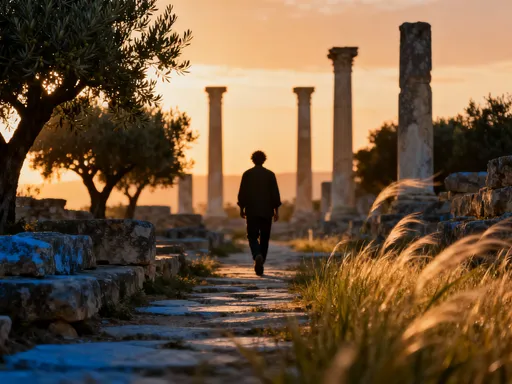
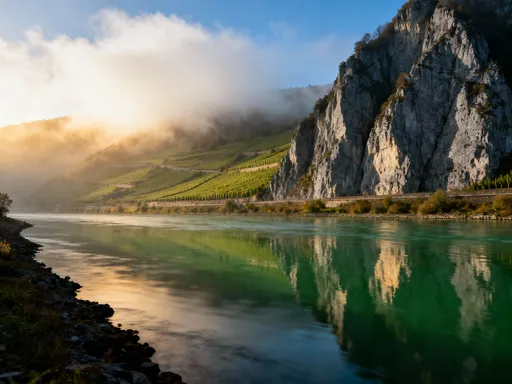
What’s remarkable is that the cityscape of Olympia is not static. It changes with the time of day and the season. At dawn, mist rises from the river, wrapping the ruins in a soft glow. At midday, the sun illuminates the marble with a brightness that makes every detail sharp and clear. At sunset, the stones turn amber and rose, casting long shadows that stretch like fingers across the ground. Each visit can feel different, not because the ruins change, but because the way we see them does.
This evolving relationship between viewer and viewed is part of Olympia’s magic. It reminds us that history is not something we merely observe. It is something we participate in. Every footstep, every quiet moment of reflection, becomes part of the site’s ongoing story. The cityscape does not demand attention—it invites it, gently, through the rustle of leaves, the warmth of sun-baked stone, and the quiet sense that you are standing in a place that has witnessed both human triumph and humility.
The Stadium and Gymnasium: Where Athletes Once Moved
No visit to Olympia is complete without stepping into the ancient Olympic Stadium, the birthplace of the Games that would inspire a global tradition. Unlike modern stadiums with towering stands and electronic screens, this one is simple, carved into the natural slope of the hill. The track is made of packed earth, still marked with the starting blocks where runners once crouched, muscles tensed, waiting for the signal to begin. Standing on that line, you can almost hear the roar of the crowd—70,000 strong—rising from the grassy banks that once held spectators from across the Greek world.
The emotional weight of this space is profound. This was not just a place of competition; it was a stage for honor, discipline, and unity. Athletes came from distant city-states, some at war with one another, yet during the Olympic truce, they competed as equals. The Games were not just about victory—they were about virtue, about striving for excellence in body and spirit. To stand where Milo of Croton once lifted bulls, or where runners raced barefoot in the dust, is to feel a deep connection to human potential.
Nearby, the remains of the gymnasium offer a glimpse into the daily life behind the glory. This was where athletes trained, not in isolation, but as part of a larger community. The long colonnaded courtyard once housed exercise spaces, bathing areas, and rooms for philosophical discussion. Physical training and intellectual growth went hand in hand. The Greeks believed that a strong body should house a strong mind, and the gymnasium was designed to nurture both.
Walking through this space, you can imagine young men running laps, wrestlers practicing on the sand, and trainers calling out instructions in ancient Greek. But you can also imagine quieter moments—athletes cooling off in the shade, discussing strategy, or simply resting after a long day. These were not just competitors; they were people, with hopes, fears, and dreams. The gymnasium reminds us that behind every great event are countless hours of preparation, sacrifice, and dedication. It adds depth to the story of the Games, transforming them from spectacle into something deeply human.
Modern Olympia: The Town That Keeps the Past Alive
Just a short walk from the archaeological site lies the modern town of Olympia, a quiet, welcoming place that honors its heritage without becoming a caricature of it. Unlike some historical destinations that turn into tourist-only zones, this town feels lived-in. Families gather in the central square, children play near the fountain, and elders sit on benches sipping coffee in the shade. The architecture is modest—whitewashed buildings with blue shutters, flower boxes overflowing with geraniums—but it complements the landscape rather than competing with it.
What makes the town special is its balance. It does not ignore its past; it embraces it with quiet pride. Small museums, local shops selling handmade olive wood crafts, and family-run tavernas line the streets. There are no chain stores or loud nightclubs. Instead, you’ll find places like a small bakery where the owner greets regulars by name, or a café where the specialty is mountain tea harvested from the nearby hills. These are not performances for tourists—they are everyday moments in a community that knows its place in history.
For visitors, the town offers a chance to slow down and savor the local rhythm. A recommended stop is a family-owned taverna on the edge of town, where grilled octopus, fresh tomatoes, and local feta are served on checkered cloths with views of the surrounding hills. Another favorite is a quiet coffee house tucked behind the church, where you can sit with a frappé and watch the afternoon light shift over the rooftops. These simple pleasures ground the experience, reminding you that history is not just in the past—it is carried forward in the way people live, eat, and gather.
Modern Olympia does not try to be ancient. It does not dress up or stage reenactments. Instead, it lives authentically, allowing the past to inform the present without defining it entirely. This balance makes the town a perfect companion to the archaeological site. After a morning of walking among ruins, sitting in a local square with a cold drink and a view of the mountains feels not like an escape, but like a continuation of the journey—one that connects ancient ideals with modern life.
Museum Magic: Seeing the Past Come Alive
No visit to Olympia is complete without a visit to the on-site Archaeological Museum, a modern building designed to blend with the landscape while protecting some of the most important artifacts ever found here. Inside, the past comes into sharp focus. The lighting is soft, the air cool and still, creating a sanctuary for objects that once lived in sunlight and wind. Among the most moving pieces is the Nike of Paionios, the winged goddess of victory, captured mid-flight, her drapery flowing as if blown by a divine wind. Carved from marble, she seems almost weightless, a symbol of triumph that transcends time.
Even more powerful is the Hermes of Praxiteles, the only surviving original statue by one of antiquity’s greatest sculptors. Found in the Temple of Hera, this statue depicts Hermes holding the infant Dionysus, his face calm, his posture relaxed yet dignified. What strikes most visitors is the lifelike quality—the soft curve of the lips, the gentle drape of the cloak, the way the stone seems to breathe. Standing before it, you forget you are looking at a 2,000-year-old object. You feel as if Hermes might speak, might step down from his pedestal and walk into the sunlight.
These artifacts do more than decorate a museum. They deepen the experience of the ruins outside. After seeing the Hermes, you return to the sanctuary with new eyes, imagining the colors, the crowds, the rituals that once filled these spaces. The museum does not replace the site—it enhances it, bridging the gap between imagination and reality. It answers the silent questions that arise while walking among stones: What did this look like? Who prayed here? What did they believe?
For many visitors, one moment in the museum becomes the turning point—the instant when history stops being abstract and becomes personal. For some, it’s seeing the bronze discus thrower’s hand, perfectly shaped after centuries underground. For others, it’s the simple clay oil lamps used by athletes before the Games. These objects, small and humble, carry the weight of human presence. They remind us that the people of ancient Olympia were not statues or myths—they were real, with hands that held, eyes that saw, and hearts that hoped. And in that recognition, we find connection.
When to Go & How to Experience It Fully
To truly appreciate Olympia, timing and pace matter. The best times to visit are early morning or late afternoon, when the light is soft and the temperatures are mild. Midday sun in summer can be intense, and the site offers limited shade. Arriving at opening time allows you to walk the grounds in near-silence, with only a few other visitors and the sound of birds to accompany you. By late morning, tour groups begin to arrive, and while they add energy, they can also disrupt the quiet contemplation that makes Olympia so special.
Spring and autumn are ideal seasons. In April and May, the valley is lush, wildflowers are in bloom, and the air is fragrant. In September and October, the crowds have thinned, the weather remains warm, and the light takes on a golden hue that enhances the marble’s beauty. July and August bring the largest number of visitors, along with heat that can make walking uncomfortable. If you must go in summer, plan to arrive early and bring water, a hat, and sunscreen.
Footwear is crucial. The ground is uneven—packed earth, stone paths, and grassy slopes—so sturdy, comfortable shoes with good grip are essential. Sandals or heels may look stylish, but they are impractical and potentially unsafe. A small backpack with water, a light snack, and a guidebook or map can enhance your visit without weighing you down.
To experience Olympia fully, resist the urge to rush. This is not a site to check off a list. Allow at least three to four hours, more if you plan to visit the museum and spend time in the town. Combine your visit with a walk along the Kladeos River, where plane trees create a cool canopy and the sound of water adds to the serenity. As the day ends, find a quiet spot on the hillside to watch the sunset. The way the light fades over the ruins—first golden, then pink, then soft blue—is a moment of quiet magic, one that stays with you long after you leave.
Conclusion
Olympia isn’t just a destination; it’s a conversation between past and present. Its cityscape doesn’t shout—it whispers, invites, transforms. By walking mindfully through its stones and shadows, we don’t just see history. We feel it, carry it, become part of its next chapter. This is not a place of grand spectacle, but of quiet significance—where nature and memory walk side by side, where every stone has a story, and every breeze carries a fragment of the past. For the thoughtful traveler, especially those who value depth over dazzle, Olympia offers something rare: a chance to slow down, to reflect, and to connect with something timeless. It reminds us that greatness is not always loud, and that the most enduring legacies are often the ones that speak softly, through the rustle of leaves, the warmth of the sun, and the quiet pulse of history beneath our feet.