You Won’t Believe These Hidden Corners of Marianske Lazne Through My Lens
Marianske Lazne isn’t just a spa town—it’s a visual story waiting to be captured. Wandering its districts, I was stunned by pastel facades, forest-lined alleys, and the quiet elegance of a bygone era. Through my camera, each neighborhood revealed a different mood—romantic, nostalgic, even mysterious. If you’re into photography, this place is pure gold. Here’s where the real magic hides beyond the postcard spots. With its carefully preserved architecture, lush green surroundings, and soft play of light across cobblestones and colonnades, Marianske Lazne offers an endlessly rewarding canvas for visual storytelling. This is not a destination best seen through a guidebook, but one best experienced through patient observation and a curious eye.
The Heartbeat of the Spa District: Where Elegance Meets Light
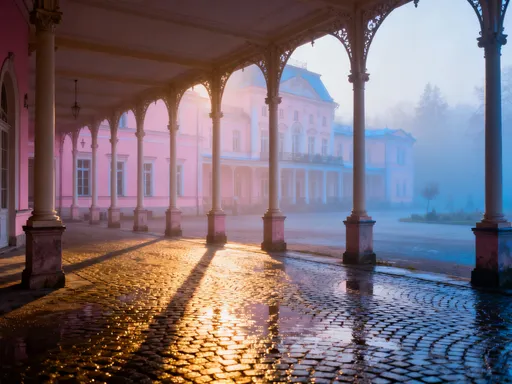
The core of Marianske Lazne’s identity pulses strongest in its Spa District, where grand 19th-century architecture meets the healing rhythms of nature. This is where visitors first arrive, drawn by the promise of wellness and beauty. The central colonnades—ornate, white-pillared walkways—frame the town’s most iconic thermal springs, including the elaborate Mill Colonnade with its five domes and 124 Corinthian columns. These structures were designed not only for function but for spectacle, and they remain stunning subjects for photography, especially in the early morning when soft, diffused light filters through the arches.
Photographers will find that arriving before 8 a.m. offers the best conditions. The low sun casts long, gentle shadows across the pale stone, emphasizing texture and depth. Mist often rises from the warm mineral waters, curling like smoke around the pillars and adding a dreamlike quality to compositions. Reflections in the still pools create natural symmetry, ideal for capturing balanced, serene images. Using a wide-angle lens to include both the architecture and its reflection can result in powerful, immersive shots that convey the grandeur of the space.
What makes this area so visually compelling is not just its scale, but its harmony. The neoclassical and neo-Renaissance buildings surrounding the springs were built with intention, each contributing to a unified aesthetic that speaks of order, grace, and refinement. This deliberate design makes it easier to compose strong images—leading lines from walkways, repeating arches, and balanced facades naturally guide the eye. For those using manual settings, a narrow aperture (f/8 to f/11) ensures both foreground details and distant rooftops remain in focus, capturing the full breadth of the scene.
The Spa District sets the tone for the entire town’s visual language. Its elegance is not flashy, but understated—a kind of quiet confidence that reflects the town’s long history as a retreat for Europe’s elite. Even today, visitors stroll slowly, dressed in spa robes, sipping mineral water from ornate cups. These moments, though fleeting, offer rich opportunities for candid photography. A woman pausing beneath a column, a man listening to a street musician near the fountain—these human elements add warmth and narrative depth to architectural shots. By photographing both structure and life, one begins to tell a fuller story of what Marianske Lazne truly is.
Staré Město (Old Town): A Glimpse into Authentic Daily Life
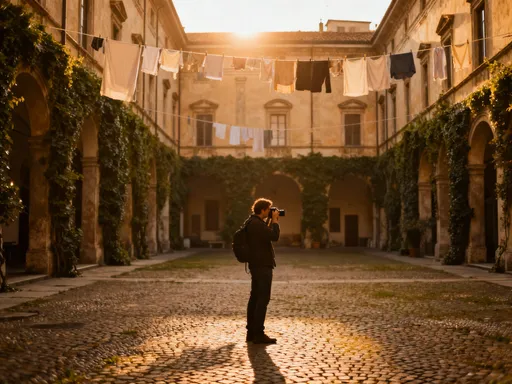
A short walk from the polished colonnades lies Staré Město, or Old Town, a quieter, more intimate side of Marianske Lazne that reveals the rhythm of everyday life. Here, the grandeur gives way to charm—narrow cobblestone streets wind between pastel-painted houses with flower boxes overflowing with geraniums and petunias. Laundry hangs from upper windows, bicycles lean against garden gates, and the scent of fresh bread drifts from small local bakeries. This is where residents live, shop, and gather, far from the curated elegance of the spa circuit.
For photographers seeking authenticity, Staré Město offers a treasure trove of human-centered moments. A vendor arranging produce at the morning market, children walking to school in bright raincoats, an elderly couple sharing coffee at a sidewalk table—these scenes unfold naturally and require a patient, observant approach. The key is to move slowly, to blend in rather than stand out. A discreet prime lens, such as a 35mm or 50mm, works best here, allowing for natural framing without intrusion.
The architecture in this district is simpler but no less photogenic. Many buildings date back to the 18th and 19th centuries, featuring wooden shutters, wrought-iron details, and tiled roofs softened by time. The irregular street layout creates unexpected compositions—angled rooftops meeting at odd corners, doorways framed by climbing ivy, or a sudden view of the distant hills through a narrow alley. These spontaneous arrangements invite creative framing and encourage photographers to look beyond the obvious.
One of the most rewarding aspects of photographing Staré Město is the interplay of light and shadow. Because the streets are narrow and often shaded, sunlight filters in patches, illuminating a red door here, a basket of apples there. This dappled effect adds drama and focus, drawing attention to small details that might otherwise go unnoticed. Shooting in the mid-morning or late afternoon enhances this contrast, while overcast days provide even, soft lighting ideal for capturing color and texture without harsh highlights.
Unlike the Spa District, where every angle feels composed, Staré Město thrives on imperfection. A chipped paint corner, a crooked sign, a cat sleeping on a windowsill—these are not flaws, but features. They tell stories of time, care, and continuity. Photographers who embrace this aesthetic will find that their images carry a deeper emotional resonance, one rooted in place and presence rather than perfection.
Na Špičaku: Elevated Views and Forest Vistas
Rising above the town’s center, the Na Špičaku district offers a different perspective—both literally and visually. Nestled along forested slopes, this residential area rewards those willing to climb with sweeping views, serene pathways, and a sense of seclusion. The name itself, meaning “on the point” or “on the tip,” hints at its vantage point overlooking the valley below. Here, the town spreads out like a miniature model, its rooftops and spires framed by dense greenery.
For photographers, Na Špičaku is a haven for landscape and architectural fusion. The hilly terrain creates natural leading lines—winding roads, stone steps, and tree-lined paths guide the eye toward distant landmarks. At sunrise, the first light hits the upper edges of buildings, setting their roofs aglow while the lower streets remain in shadow. This contrast enhances dimensionality, making images feel more dynamic and layered. A telephoto lens can compress the scene, bringing distant elements closer and emphasizing patterns in the urban layout.
The surrounding forest is just as compelling. Tall beech and spruce trees form natural frames for shots of houses peering through the foliage. In autumn, the mix of golden leaves and dark evergreens creates a rich tapestry of color and texture. During golden hour—the hour after sunrise and before sunset—the low-angle light filters through the canopy, casting long rays that add warmth and mystery to photos. This is the ideal time to experiment with silhouettes, backlighting, and atmospheric depth.
Several observation points along the trails offer panoramic views, perfect for wide-angle compositions. One popular spot near the top of Na Špičaku provides a sweeping vista of the town center, with the Mill Colonnade and Church of St. Mary Magdalene clearly visible. From here, it’s possible to capture the relationship between nature and architecture—how the town grows out of the forest, how green spaces weave through urban areas. These broader perspectives help contextualize the more intimate shots taken elsewhere, adding narrative cohesion to a photographic series.
Because this area is less frequented by tourists, it retains a peaceful, almost meditative quality. Birdsong replaces street noise, and the air feels cleaner, crisper. This tranquility often translates into calmer, more contemplative images. Photographers may find themselves slowing down, waiting for the right light or the perfect alignment of elements. In Na Špičaku, the process becomes as important as the result—a reminder that photography is not just about capturing beauty, but about experiencing it.
Hernov: The Forgotten Charm Near the Famous Spring
Just a short distance from the main spa area lies Hernov, a lesser-known district centered around the iron-rich Hernov Spring. While not as grand as the Mill Colonnade, this spring has its own distinct character—rustic, earthy, and quietly powerful. The water, tinted reddish-brown by high iron content, emerges from a stone grotto and flows into a series of small basins. Moss clings to the stonework, and steam often rises from the mineral-rich pool, especially in cooler months. This is a place where nature and industry quietly coexist.
Photographically, Hernov offers a striking contrast to the polished elegance of the central district. The textures here are rougher—rusted metal railings, weathered wood, crumbling plaster, and lichen-covered stone. These elements create a moody, almost cinematic atmosphere, ideal for black-and-white photography. Converting images to monochrome enhances the contrast between light and shadow, drawing attention to form, pattern, and emotion rather than color. A high-contrast edit can make dripping water look like silver threads or turn a patch of moss into a dense, ancient forest.
The Hernov Spring building itself is a relic of 19th-century spa engineering—functional rather than ornamental. Its arched entrance and iron supports speak of a time when utility and durability were prioritized alongside beauty. Photographing the details—peeling paint on a door, rivets in a metal beam, water droplets on a stone lip—reveals a different kind of elegance, one born of time and use. A macro lens can capture the intricate patterns in rust or the delicate structure of moss, turning small details into compelling standalone images.
This area also invites storytelling through sequence. A series of photos might begin with a wide shot of the springhouse, move to a mid-range view of someone drinking from the fountain, and end with a close-up of iron-stained water dripping into a basin. Such a progression mirrors the experience of discovering the place—moving from the general to the specific, from the external to the intimate. It also reflects the town’s layered history, where health, industry, and nature are deeply intertwined.
Because Hernov is often overlooked, it retains a sense of quiet authenticity. Fewer visitors mean fewer distractions, allowing photographers to work at their own pace. The soft gurgle of water, the creak of old wood, the occasional call of a distant bird—all contribute to an atmosphere of stillness. In this environment, even small changes in light become noticeable, offering subtle shifts in mood throughout the day. Hernov may not be the most glamorous part of Marianske Lazne, but it is one of the most honest.
Parková and the Green Embrace: Nature as a Photographic Canvas
Woven throughout Marianske Lazne like green threads are its parks—spacious, carefully landscaped, and deeply integrated into daily life. Among them, Parková stands out as a central green corridor connecting several districts. Lined with chestnut and linden trees, crisscrossed by winding gravel paths, and dotted with small ponds and benches, this park offers endless opportunities for serene, nature-infused photography.
The interplay of light and foliage is one of Parková’s most enchanting features. In summer, the canopy forms a living ceiling, filtering sunlight into dappled patterns on the ground. These shifting spots of light create natural focal points—a child’s shoe suddenly illuminated, a patch of moss glowing green, a swan’s reflection broken by ripples. Shooting in aperture priority mode with a wide opening (f/2.8 to f/4) can create a soft background blur, making these illuminated details stand out even more.
Water features add another layer of visual interest. The park’s ponds are home to ducks, swans, and the occasional kingfisher, offering opportunities for wildlife photography. Early morning is best for capturing these moments, when the water is still and mist often hovers just above the surface. A polarizing filter can reduce glare and enhance the clarity of reflections, turning the pond into a mirror that doubles the beauty of the surrounding trees and sky.
But Parková is not just about scenery—it’s about people. Locals stroll with dogs, couples sit on benches reading, children chase bubbles along the path. These moments of quiet joy are worth documenting. A wide-angle lens can include both the environment and the human element, showing how people inhabit and enjoy the space. Candid shots, taken respectfully and without intrusion, convey a sense of belonging and peace.
The park also serves as a visual counterbalance to the more structured architecture of the spa district. Where buildings offer symmetry and order, nature provides fluidity and spontaneity. Including both in a photographic series creates a richer, more complete portrait of the town. Parková reminds us that beauty is not only found in grand designs, but in the simple act of walking beneath trees, listening to birds, and watching the light change with the hour.
Charming Detours: Unexpected Details in Quiet Alleys
Some of the most memorable photographs are not of landmarks, but of small, overlooked details—those quiet whispers of history and character that hide in plain sight. In Marianske Lazne, these can be found in the side alleys, the back streets, the spaces between buildings. A weathered door knocker shaped like a lion’s head, a vintage street sign with faded lettering, a patch of ivy creeping up a stone wall—these elements may seem insignificant, but together they form the soul of the town.
Photographers who adopt a “detail hunt” mindset will find endless inspiration. Instead of rushing from one major site to the next, they learn to pause, to look down, to look up, to peer around corners. A close-up of a rusted hinge can suggest decades of use; a chipped paint edge can hint at layers of history; a single flower growing from a crack in the pavement can symbolize resilience. These images often carry more emotional weight than sweeping vistas because they feel personal, intimate, and true.
Using a macro lens or the close-focus capability of a standard lens allows for detailed exploration. Even smartphone cameras, with their portrait modes and high-resolution sensors, can capture stunning detail shots. The key is to isolate the subject—using a shallow depth of field to blur the background, or positioning the element against a solid color to make it stand out. Natural light, especially soft side lighting, enhances texture and dimension.
These small elements also tell stories of time and change. A brass doorplate worn smooth by countless hands, a shutter with peeling blue paint, a cobblestone worn into a shallow groove by centuries of footsteps—each bears the mark of human presence. Photographing them is a way of honoring that presence, of preserving a fleeting moment of connection across time. In a world that often values the new and the grand, these details remind us of the beauty in the worn, the weathered, the enduring.
From Sunrise to Dusk: How Light Transforms Each District
One of the most powerful lessons Marianske Lazne teaches photographers is the transformative effect of light. The same street, the same building, the same park bench can look entirely different depending on the time of day. Sunrise bathes the town in cool, silvery tones, casting long shadows and emphasizing texture. Midday brings even, high-contrast light, ideal for sharp architectural shots but often too harsh for softer scenes. Golden hour, just before sunset, wraps everything in warm amber and rose hues, making stone glow and leaves shimmer. And at dusk, street lamps flicker on, windows light up, and the town takes on a cozy, intimate atmosphere.
Revisiting the same location at different times is one of the most effective ways to deepen a photographic project. A colonnade photographed at dawn, with mist rising from the springs, feels mystical. The same colonnade at noon, with tourists strolling beneath clear blue skies, feels lively and social. At dusk, with warm lights reflecting in the pools, it feels romantic. Each version tells a different story, revealing another facet of the place.
This approach also trains the eye to see more deliberately. Instead of snapping a single shot and moving on, photographers learn to observe how light moves, how shadows shift, how colors change. A wall that looks plain at noon may come alive at sunset when the low light highlights its texture. A quiet alley may feel cold in the morning but welcoming in the evening when warm light spills from windows.
Planning a day around light—starting early, taking a break during midday, returning in the afternoon and evening—allows for a richer, more varied portfolio. It also encourages a slower, more mindful way of traveling. Rather than chasing checklists, one begins to inhabit a place, to feel its rhythm. In Marianske Lazne, where beauty is layered and subtle, this kind of attention is not just rewarding—it’s essential.
The changing light also mirrors the emotional journey of photography itself—from anticipation at dawn, to engagement at midday, to reflection at dusk. Each phase offers its own rewards, its own challenges, its own kind of magic. By embracing the full arc of the day, photographers don’t just capture images—they experience the soul of the town.
Marianske Lazne’s true beauty lies not in one iconic view, but in the layered stories of its districts. Through photography, we don’t just document places—we feel their rhythm. Pick up your camera, wander without a map, and let the town reveal itself, one frame at a time. Whether you’re drawn to grand architecture, quiet streets, forested hills, or tiny details, this town offers a wealth of visual poetry. It invites patience, curiosity, and presence. And in return, it offers moments of wonder—fleeting, beautiful, and deeply human.