You Won’t Believe These Hidden Architectural Gems in Osaka
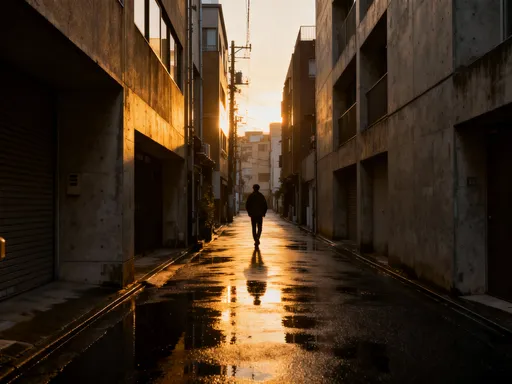
Osaka is more than neon lights and street food—it’s a city of quiet architectural wonders hiding in plain sight. While most tourists flock to Shinsekai or Umeda, I stumbled upon surreal buildings tucked in backstreets and forgotten corners. From surreal concrete forms to repurposed warehouses, these off-the-beaten-path sites reveal a side of Osaka few ever see. This isn’t just sightseeing—it’s urban discovery at its most thrilling. Beyond the postcard-perfect skyline, the city whispers stories through its overlooked structures: a weathered facade, a curve of reinforced concrete, a shaft of light slicing through an underground corridor. These are not monuments built for fame, but quiet testaments to innovation, resilience, and local identity. For the curious traveler, they offer a deeper, more intimate understanding of Osaka’s soul.
Beyond the Skyline: Rethinking Osaka’s Architectural Identity
When most people think of Osaka’s architecture, images of the Umeda Sky Building or the glittering Abeno Harukas tower dominate their imagination. These skyscrapers, impressive as they are, represent only one chapter in the city’s architectural story. The true depth of Osaka’s built environment lies not in its vertical ambitions but in its horizontal whispers—structures that don’t shout for attention but invite closer inspection. Unlike Tokyo, which often embraces sleek minimalism and high-tech futurism, Osaka has long favored bold experimentation, pragmatic innovation, and a certain rawness that reflects its mercantile spirit and postwar rebuilding ethos.
The city’s architectural identity was forged in the crucible of recovery following World War II. With much of its urban fabric destroyed, Osaka had to rebuild quickly and efficiently. This necessity gave rise to a generation of architects who prioritized function without sacrificing form. Municipal housing projects, public baths, administrative buildings, and transportation hubs were designed with durability and social utility in mind, yet many incorporated striking geometric forms, textured materials, and thoughtful spatial planning. These buildings were never meant to be tourist attractions, but today, they stand as quiet monuments to a time when architecture served both the community and artistic vision.
What makes Osaka unique is its willingness to let architecture evolve organically. The city has historically supported experimental design, even in modest civic projects. Local governments commissioned architects to create spaces that responded to the needs of everyday life while also expressing regional character. This blend of pragmatism and creativity fostered an environment where Brutalism, Metabolism, and adaptive reuse could take root. As a result, Osaka is home to a rich tapestry of underappreciated structures—buildings that may lack international fame but possess an authenticity rarely found in more polished urban centers.
By shifting focus from the iconic to the incidental, travelers can uncover a more nuanced narrative of the city. These hidden gems are not hidden because they are insignificant; they are overlooked because they don’t conform to conventional ideas of beauty or grandeur. Yet, in their simplicity, repetition, and material honesty, they reveal a deeper truth about Osaka: a city that values substance over spectacle, resilience over refinement, and lived experience over curated image.
Concrete Dreams in Tsuruhashi: The Hidden Brutalist Beauty
Tucked away in the bustling Tsuruhashi district, best known for its vibrant Korean community and lively street markets, lies an unexpected collection of mid-century public buildings that embody the essence of Japanese Brutalism. While visitors come for the food and cultural energy, few pause to notice the imposing yet elegant municipal structures that line the quieter side streets. These buildings—housing offices, community centers, and public housing complexes—feature raw concrete facades, geometric repetition, and a sense of grounded permanence that contrasts sharply with the transient energy of the market stalls nearby.
Brutalism, a movement that emerged globally in the mid-20th century, found a distinct expression in Japan during the 1960s and 70s. In Osaka, it was embraced not as a statement of austerity, but as a philosophy of honest construction. The use of exposed concrete was not a cost-cutting measure but a deliberate aesthetic choice—one that celebrated the material’s strength, texture, and ability to age gracefully. In Tsuruhashi, this is evident in the rhythmic patterns of shuttered concrete, the deep recesses of window openings, and the way light interacts with angular surfaces throughout the day.
One particularly striking example is a former welfare office building, now partially repurposed, which features a series of stacked horizontal volumes connected by wide, open staircases. The structure’s façade is marked by vertical grooves that create a sense of upward movement, while the interior spaces are designed to maximize natural light and airflow—a hallmark of thoughtful Japanese public architecture. Though unassuming from the street, the building reveals its sophistication upon closer inspection, with carefully considered proportions and a sense of balance between mass and void.
These Brutalist structures matter because they represent a moment in Japan’s urban history when architecture was seen as a tool for social progress. They were built to serve the public, to endure, and to reflect a belief in collective well-being. Unlike private developments that cater to luxury or tourism, these buildings were designed for ordinary citizens—teachers, clerks, families—and their presence in neighborhoods like Tsuruhashi speaks to a time when civic pride was embedded in the built environment. Today, as many of these buildings face potential demolition or renovation, their preservation becomes not just an architectural concern, but a cultural one.
Abandoned to Art: The Transformation of Old Warehouses in Nakanoshima
Along the banks of the Okawa River, in the heart of Nakanoshima, a quiet revolution has been unfolding. Once a hub of industrial activity, this narrow island between two branches of the river was lined with warehouses that stored goods transported via the city’s extensive canal system. As Osaka’s economy shifted toward services and technology, these buildings were abandoned, left to weather the elements. But in recent decades, a wave of creative renewal has transformed them into dynamic spaces for art, design, and cultural exchange.
The architectural transformation of these warehouses is a masterclass in adaptive reuse. Original brick walls, weathered by decades of humidity and rain, now stand alongside sleek glass extensions and steel-framed galleries. The contrast is intentional—preserving the memory of the past while embracing contemporary functionality. High ceilings, once necessary for stacking cargo, now provide ideal conditions for large-scale installations. Exposed wooden beams and iron trusses have been retained, not as nostalgic decoration, but as integral elements of the new design language.
One of the most notable conversions is a former textile storage facility now housing a rotating series of exhibitions by local and international artists. The building’s façade remains largely unchanged, with its arched windows and faded signage still visible, but inside, the space has been reimagined with modular lighting, movable partitions, and climate control systems that allow for diverse artistic media. Visitors walk across original hardwood floors, their footsteps echoing under skylights that flood the space with natural light. The result is a harmonious blend of old and new—one that respects the building’s history while enabling it to serve a new generation.
Accessibility has been carefully considered. The site is within walking distance of Nakanoshima Station and is open to the public during gallery hours. Informational plaques in multiple languages explain the building’s history and the principles behind its renovation. Guided tours are available on weekends, offering insights into the structural challenges of retrofitting old industrial buildings and the creative decisions behind their reuse. For families and older visitors, the space is welcoming, with seating areas, restrooms, and quiet zones to encourage lingering and reflection.
Floating Forms in Temmabashi: A Hidden Residential Masterpiece
In the quiet residential neighborhood of Temmabashi, just a short walk from the bustling Midosuji Avenue, stands a private housing complex that defies conventional design. At first glance, it appears unremarkable—a cluster of low-rise buildings nestled among trees and quiet streets. But upon closer observation, the architecture reveals itself as a bold experiment in form and space. Designed by a lesser-known local architect in the early 2000s, the complex features cantilevered balconies that seem to float in mid-air, fluid concrete shapes that curve around shared courtyards, and a play of light and shadow that changes dramatically from morning to evening.
What makes this complex extraordinary is its integration of Metabolist principles with modern residential needs. The Metabolist movement, which emerged in Japan in the 1960s, envisioned cities as living organisms capable of growth and transformation. While many Metabolist projects remained conceptual, this Temmabashi development applies those ideas on a human scale. Modular units are arranged in a way that allows for future expansion or reconfiguration, and the use of precast concrete panels enables both durability and design flexibility. The balconies, which extend dramatically beyond the structural core, create shaded outdoor spaces while adding a sculptural quality to the façade.
Despite its architectural significance, the complex remains largely unknown to tourists and even many locals. It is not listed on official tourism maps, nor is it part of any guided architecture tour. Yet, for those who know where to look, it offers a rare glimpse into the quiet innovation happening in Osaka’s residential districts. The best way to experience it is from the sidewalk during daylight hours, when the interplay of light and shadow highlights the building’s geometric complexity. Visitors are encouraged to observe respectfully, without entering private areas or disturbing residents.
The architect, who still lives in the area, has spoken in interviews about the importance of designing for community and continuity. The shared courtyard at the center of the complex is intentionally designed to encourage interaction among neighbors, with benches, plantings, and pathways that invite casual encounters. This emphasis on social space reflects a broader trend in Japanese urban design—one that prioritizes human connection over visual spectacle. For the observant traveler, the Temmabashi complex is not just a building to admire, but a lesson in how architecture can support everyday life.
The Secret Underground Passages of Namba
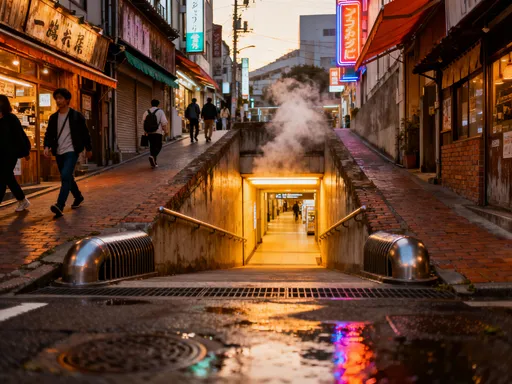
Beneath the surface of Namba, one of Osaka’s busiest commercial districts, lies a network of underground passages that few tourists ever fully explore. While many visitors use these tunnels to navigate between train lines or escape the rain, they rarely take the time to appreciate the architectural thought behind them. These subterranean corridors are more than functional walkways—they are carefully designed environments that blend utility with aesthetics, creating a unique urban experience below ground.
The Namba underground system spans several kilometers and connects major stations, department stores, restaurants, and shopping arcades. What sets it apart from similar systems in other cities is its attention to spatial quality. The ceilings are often curved, creating a sense of flow and reducing the feeling of confinement. Lighting is modular and adjustable, with warm-toned fixtures that mimic natural daylight and help regulate circadian rhythms. Ventilation systems are discreet but effective, ensuring air quality remains comfortable even during peak hours.
Equally remarkable are the unexpected artistic touches scattered throughout the tunnels. Murals by local artists, embedded glass installations, and seasonal floral displays transform what could be a monotonous environment into a dynamic public space. In one section near Namba Parks, a series of skylights allows sunlight to filter down into the lower levels, creating shifting patterns on the floor throughout the day. These design elements are not mere decoration—they serve to orient pedestrians, reduce stress, and enhance the overall sense of well-being.
The underground network also plays a crucial role in climate adaptation. Osaka’s humid summers and occasional heavy rains make above-ground navigation challenging, especially for older adults and families with young children. The tunnels provide a safe, climate-controlled alternative, allowing people to move across the district without exposure to extreme weather. This functional resilience is a hallmark of Osaka’s urban planning—one that anticipates real-life needs rather than prioritizing visual impact. For the thoughtful traveler, walking through these passages is not just a practical necessity, but an opportunity to experience the city’s intelligence and care in action.
Why These Hidden Structures Matter: The Soul of Urban Authenticity
In an age of curated travel experiences and Instagrammable landmarks, the value of unnoticed architecture might seem negligible. Yet, these hidden structures—whether a Brutalist housing block, a repurposed warehouse, or an underground passage—hold the essence of what makes a city authentic. They are not designed for virality or tourism; they exist because they serve a purpose, respond to a context, and reflect a moment in time. In preserving and appreciating them, we safeguard not just buildings, but memories, identities, and the collective wisdom of urban life.
True authenticity in travel comes not from checking off famous sights, but from encountering the unplanned, the unpolished, and the everyday. These architectural shadows reveal a city’s resilience, creativity, and capacity for reinvention. They remind us that beauty is not always found in perfection, but often in adaptation, wear, and quiet persistence. A cracked concrete wall, a repurposed beam, a shaft of light in a tunnel—these are the details that tell the deeper story of a place.
Moreover, these spaces embody principles of sustainability long before the term became a global buzzword. Adaptive reuse reduces waste and conserves resources. Brutalist buildings, often criticized for their appearance, were designed to last for generations with minimal maintenance. Underground networks reduce urban congestion and energy consumption. By recognizing the value in these designs, we affirm a more responsible approach to urban development—one that honors the past while building for the future.
For the traveler, especially one seeking meaningful connection and depth, these sites offer a chance to slow down, observe closely, and engage with the city on a human scale. They invite contemplation rather than consumption. And in doing so, they transform the act of travel from mere sightseeing into a form of quiet discovery—one that leaves a lasting impression not because it was spectacular, but because it was real.
How to Explore Osaka’s Architectural Shadows: A Practical Guide
Discovering Osaka’s hidden architectural gems requires a shift in mindset—from rushing between highlights to wandering with intention. The first step is to leave the main tourist paths and embrace neighborhoods that locals frequent. Tsuruhashi, Nakanoshima, Temmabashi, and Namba’s underground network are all accessible by public transportation, making them easy to reach without a car. The Osaka Metro system is efficient, clean, and well-signed in English, with maps available at every station.
Timing matters. For photography and quiet observation, weekday mornings are ideal—fewer crowds, softer light, and a greater chance to appreciate architectural details without distraction. If visiting repurposed spaces like the Nakanoshima galleries, check opening hours in advance, as some are closed on Mondays or have limited weekend access. The underground passages in Namba are accessible throughout the day, but early afternoon offers the best balance of activity and comfort.
Respect is paramount, especially when exploring residential areas like Temmabashi. Always remain on public sidewalks, avoid blocking entrances, and never attempt to enter private buildings. Speak quietly and move with awareness. If taking photographs, do so discreetly and avoid focusing on individuals. These communities are not exhibits—they are lived-in spaces, and visitors should act as respectful guests.
Useful tools include downloadable architecture maps from the Osaka City Museum of Housing and Living, which highlight lesser-known sites across the city. Mobile apps like Japan Travel by NAVITIME offer walking tour suggestions, including self-guided routes focused on design and urban history. For a more immersive experience, consider joining a small-group walking tour led by a local architect or urban planner—these are occasionally offered through cultural centers and universities and provide invaluable context.
Finally, allow time to simply sit and observe. Bring a notebook, sketch a detail, or just pause to watch how people interact with these spaces. Architecture is not just about form—it’s about life. And in Osaka’s quiet corners, that life unfolds in ways both subtle and profound. The city’s true beauty isn’t in its brightest lights, but in the shadows where imagination and necessity once met. Look closely. You might be surprised by what you find.